i2imca comes to Scotland

One benefit of being involved with a road safety charity concerned with motorcyclists is that venues and other service providers are willing to “go that extra mile” when it comes to trying something new or helping with charitable aims.

As you may understand from previous postings, I have undergone regular training to do with riding my motorcycle and following a successful advanced motorcycle test as administered by the Institute of Advanced Motorists (IAM), I went on to volunteer with the local group affiliated to the IAM and serve on their committee and qualified last year as an “Observer” – someone who assists others towards their advanced test.

Much of what the club does is supported by volunteers who provide their time free of charge to the group, but a lot of it is also supported by full members – those who have reached the required standard of riding through an advanced test, have been recommended for membership of the IAM and also chose to pay a subscription to the local group. This goes a long way to support advanced motorcycling in the area. As you may have guessed, someone preparing for the test is quite engaged with the group through regular motorcycle riding with their observer so they can develop the skills necessary. Once they have proved themselves with the test however, it can be a challenge thinking what to do.

This year has been quite good in terms of events for full members with our group, towards the end of last year we managed to get a day’s first aid course tailored to the needs of bikers and two of these days ended up being run. We also ran a day (which was repeated later) on skills for slow manoeuvring – something that some bikers fear because a motorcycle only has two wheels and can fall over when stationary. We run each event quite lightly in terms of resource – we run them at cost, at cheap venues and generally with volunteers. If we need a particular skill – e.g. first aid or something special, then it may cost attendees more but generally it works out cheaper.

Last weekend we organised something pretty unique – we gathered around 20 members together for a motorcycle control course run by a rather unique team from Yorkshire. The company is one of a handful ( I can only think of 2/3 in the UK) that train in the various aspects of Motorcycle control. In the UK much of advanced driver training is based on police techniques, but the book that is published about this primarily covers “Roadcraft” i.e. the thought processes involved in driving safely. The one thing that police drivers (car or motorcycle) get to go with this is several weeks of machine control instruction. This stuff isn’t in their book because it is a practical skill, and although video and photography go a long way they cannot beat hands-on instruction. You tell me whether you would be happy with someone driving a car or riding a motorcycle if all they had done is read a book and watch a DVD! i2i fill this gap with courses that draw on racing and offroad to help supply a rider with the skills to be able to apply what they want to from Advanced Observations.

i2i Motorcycle Academy (i2imca) do this by bringing together the physics of how a motorcycle works, with the psychology of how a rider works. Sometimes these things work together, but other times they don’t. The reason they don’t work together is mostly (i2imca actually maintain that it is completely) down to a belief or “story” that is based on experience or understanding of the rider, rather than the motorcycle having an issue. Getting down to these factors helps with a long list of situations, e.g. tank slappers, riding over debris, braking in the wet or on bends, and other situations where a rider may be disconcerted by a combination of events.

The two day course is made up of two of the i2imca Motorcycle control days, of which there are four in total. So-called “MC1” i.e. Machine Control 1 and “MC3” Machine Control 3 are conducted away from the public road on your own motorcycle. Throughout the two days various aspects of controlling a motorcycle are considered, a principle is illustrated, discussed and then tried and tested. Lots of these stack up over the two days so that by the end you have hopefully reconsidered some of the preconceptions you had and either challenged these a bit or actually proved stuff you thought was true. The beginning of day 1 starts with introductions between everyone there – including instructor Tom Killeen and his assistant on the day Martin Bevan, and the safety briefing. Then the context is looked at, and discussion gets on to tricky subjects like gyroscopes and stability and basically that a motorcycle is fundamentally stable whether it is a kicked back cruiser like a fat boy or a sports motorcycle like an R1. So then a demonstration by Martin on the stability of a bike, and then exercises.

Throughout MC1 and MC3 various preconceptions about what Motorcycles do in certain circumstances are called out and challenged, and then exercises tried to see if the tenet that Motorcycles are fundamentally stable is true, and what can be done with the controls to work with this to make it do what you want. What can be done with the controls to work against this is also covered, for instance there is an exercise to show how little force is needed through the handlebars in order for a motorcycle to follow a straight line. And also, how little force is needed to turn a motorcycle if you push in the right place – with your little finger! We also looked at how to work the motorcycle to stop quickly – this was a combination of finesse with the brake lever, understanding of tyre contact patch and understanding of weight transfer. These and other “basics” are presented and analysed in MC1 and then expanded on in MC3 to introduce some more surprises as to what a motorcycle can do if you deal with it properly. This included things like braking in a corner, moving your weight around when cornering, and how to keep a bike stable through a series of bends.

I’ve deliberately not mentioned what goes on in some of the exercises as they might sound a bit dangerous, the truth is that everything is done gradually and safely and the emphasis throughout the day is fun and staying in your comfort zone. The point is that you don’t learn unless you are happy, but also that you have to listen to the stuff that is explained and asked. This is so much easier when you aren’t scared witless by what you have just been asked to do.

I’ll own up now and say that this is the second time I’ve gone through MC1 and MC3 – I travelled down in April 2008 to go through the course with Tom in Wetherby. I’ll admit that I picked up a load more this time – I’m a year older as a rider, have a few more 1000 miles and other things have gone on that have an impact on confidence and how I think. And some things were just so surprising last year that I think my brain went – “aye right” and put the ideas away. A little but big thing this year was carrying out the stability exercises in a really strong gusting cross wind – this really opened my eyes. What would be great would be a really wet day – this would really put paid to those “stories” in my head about wet riding.

To be honest, some of the stuff you will encounter on an i2imca course will contradict what you have heard from others. This can be tough if you have been riding for a while – I’ll admit that I have only got back to riding a large motorcycle in 2005 and wouldn’t consider myself the most confident of riders and therefore I am perhaps a bit more open to the idea that I don’t have all of the answers. Tom has some good anecdotes that he pops in throughout the course to massage egos – i2imca have worked with Police Class1 and Class1 instructors in Yorkshire and work with local IAM groups, and described interesting experiences with both sets of riders when dealing with exercises such as tyre grip trade-off and braking in corners. The course is at pains not to criticise the ideas we have – it just presents a series of facts, with an idea and then asks you to try it out.

I’ve found it to be really helpful and it was quite interesting to see what techniques have become part of my day to day riding that I must have picked up from the previous course and not realised how it had stayed with me. What is quite exciting is how different my old (1995) BMW R1100RS feels depending on what technique I apply or forget to apply. To me it either feels slow and lardy or quick and agile – so I’d guess (or actually, know) that it is me rather than the bike that changes. Time to get out there and have some fun.
Passed 70-631 WSS Configuring Today

Yay, passed another Microsoft Exam today, almost a year since I sat my last Microsoft Exam. Today I passed 70-631 Windows SharePoint Services 3.0 Configuring.

It is an interesting exam, partly because it covers such a broad base, and partly because it was a great reminder for me as to what is included in the “free” download.

The exam itself is a broad brush affair, with bits on dns setup, network load balancing, ISA Server, MOM, basically the stuff in the exam outline is covered – so go read it up.

I got a pretty good score, which I put down to project work earlier in the year. I had a couple of decent sized projects involving Network Load Balancing on an Intranet, and another for an extranet-only site. This got me hands on with ISA, NLB, Alternate Access Mappings and all that.

To prepare I used on the job experience, Transcender test exam preparation and I built a couple of networks with WSS 3.0 in Virtual PC at work and at home.

London SharePoint User Group Meeting – August 27th

I just got an email through from Nick Swan of the UK SharePoint user group on an interesting event in London at the end of the month. He says:

“many of you who are using twitter and reading blogs will have heard of Dux Raymond as he’s very involved in the SharePoint community over in the States. In August he is over here for a visit and has kindly agreed to come and present at a user group meeting. As he’s traveling such a long way we’ve decided to give him both sessions! (and the abstracts he sent were difficult to choose between! 🙂 )

Session 1:

7 Ways to Leverage SharePoint for Project Management Success ============================================

In this presentation, you acquire the practical knowledge of how SharePoint can address common project management challenges such as inefficient communication among stakeholders, poor document management practices and undefined project collaboration standards that can compromise project success. SharePoint provides a framework that can empower project managers to create a standards-based PMIS.

Session 2:

Best Practices in Gathering Requirements for SharePoint Projects ============================================

Poor requirements can be attributed to failed SharePoint implementations. The key to successful SharePoint implementation is properly developing requirements. A lot of people know that this is important, however, only a handful of folks truly understand what it takes to do this right.

The meeting will be held at the Microsoft offices in Victoria. For more details, and to sign up – please visit the following forum thread:

http://m1e.net/c?104260145-0WYjgfpG4mCng%404485729-jgS.0XUDvmRO%2e  “

i2imca Machine Control 4

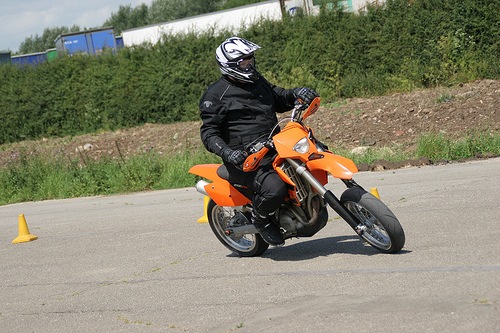
Last weekend I had the opportunity to take part in the final course of four with the i2i Motorcycle Academy. Each of the four courses uses techniques from road, off-road, supermoto and track motorcycle riding to teach participants how to work with their machine and to challenge the preconceptions we all have about what can be done and what can’t be done with a motorcycle.

Known as MC1, MC2, MC3 and MC4 the courses build on each other to challenge you and your own machine, and also off-road and supermoto machines provided by i2imca. But a key technique of the instructors is to keep you in your comfort zone while doing this, so that at no time should you be put in danger of a panic situation. And another of their key principles is that they never demonstrate techniques that they haven’t (or won’t) show you how to do in their course.

MC1 and MC3 are carried out on your own motorcycle and I did the two over a single weekend last year. This year I had opportunity to complete the other two courses, which also happen to use machines supplied by i2imca. This year in April I was introduced to off-road in MC2 and supermoto in MC4. As you can probably guess, all of the courses are conducted off public roads – this gives the instructors a sterile environment to take participants through the drills that build on each other through the course. Last year MC1 and MC3 took place at Tockwith, on an old WW2 airfield, MC2 was on an off-road track near Thirsk and MC4 took place on a section of the airfield at Rufforth.

MC4 is billed as the course to “develop very advanced skills” and covers the extremes as they relate to braking, cornering, acceleration and cornering. To do this you bring in things learned in the earlier courses, and then try to figure out how they apply to a supermoto.

3690185460_6ce5d0c213

If you’re not familiar with Supermoto, basically the bikes are motocross machines with different wheels and with the front brake changed. Road wheels and tyres are put on the machine, and a larger front brake added to be able to use the increased grip on the front wheel.

Tom Killeen, director at i2imca, started the day by getting us kitted up in the mixture of styles that comes with supermoto – motocross boots and helmet, and our own road kit for jacket, pants and gloves. Then we had a look at the bike to figure out how to ride it. Is it a road bike or an off-road bike? It has the ground clearance of a motocross bike, which compared to road bike is huge. To illustrate a point, like he does throughout the course, Tom took one of the parked KTMs and showed us how far it could be tipped over which seemed to be almost horizontal. This began to show how suited supermoto machines are to this type of course – with their excellent ground clearance and long travel suspension they are ideally suited to exploring the “extremes” of machine control.

We then had opportunity to learn the course which had been laid out in cones on the tarmac – a series of turns, jinks and even a double back had been added to make us apply the techniques we would learn – and then they added an off-road section in the afternoon! But even that was a lesson, as one group goes out the next group can watch and learn – where are they sitting? Do they move around? How do they move?

Throughout the day the course takes one “story” or preconception at a time and challenges it or illustrates it. For instance, what happens under extreme braking? Does the front wheel skid? What happens with weight transfer? To show how much grip is available we practiced the technique from MC3, which combines use of the gyroscopic effect of the wheels with managing weight transfer to maximise grip and stability. Then we took it to the extreme by changing the braking technique slightly and we were doing stoppies! This went to show how much grip we had, and then we built on that by using the weight transfer of our bodies forward or back to work with acceleration or braking.

And other important techniques built on these principles of using body weight transfer to work with the other forces and capabilities of the machine to rewrite the stories and misconceptions that come to us from all sorts of places. Countersteering was used, smoothness was emphasised and the inherent  stability of a moving motorcycle reinforced.

For me – a relative novice and the first time on a supermoto, it was a lot to take in, but Tom and his fellow instructors take things step by step and emphasise the basics – there is only so much you can take in at a time but these build and build and help all of us to be better and safer riders who can ride our machines better.

I thoroughly recommend the series of courses which fill a gap in the provision of machine control training for motorcycles, there are still riders who have ridden and ride thousands of miles a year that do not know how a motorcycle turns or that they can do anything about it apart from “lean” or others who struggle with braking hard. If you are willing to learn (and unlearn) then you will take a lot away from these courses.

Sample MOSS 2007 Web Content Management site now available

Andrew Connell, one of the people to follow on SharePoint Web content management, and also the author of the best (ok the only) book on SharePoint Web Content Management, has just posted up a blog post to follow up his excellent presentations at Tech Ed EMEA in November 2008.

I’ve got to get a good dig around in it, but the promise was that it would be a reference site for architecture as well as demos. Go see what Andrew Connell says on Adventureworks.

Getting my PC Build right with Adobe 64Bit IFilter

I’ve had my Dell Optiplex running Vista 64Bit for over a month now, but I’m still installing bits and bobs and getting the configuration right.

Tonight was the install of the 64 Bit pdf IFilter from Adobe so that search will look inside the pdfs I have already transferred across to my new PC. Although recent releases of Adobe Reader now include this piece of software that allows search to read the text of a pdf, they only include the 32 bit IFilter which will not work with Vista 64 Bit.

Scottish Supermoto

Popped along to see one of the EDAM members racing a DRZ at the Scottish Supermoto place in Crail. Got there a bit late, and the batteries ran out in the big camera, but there are one or two pics in there that turned out really well. There are also a few snaps, some photos of empty track when the bikes were moving past too quick and others that are out of focus.

I was just getting the hang of panning with a longer lense too when the batteries went. Ho hum.

See on Flickr.

Crail Supermoto by you.